
Legacies of Colonialism in Public Health
episode 7
CONTENT NOTE: This episode contains mentions of colonial violence and residential schools.
Can public health break from its colonial past for a different future?
Public health has been used as a tool of empire for centuries. Keeping settlers healthy enough to maintain colonial control over land, resources, and capital is a part of public health’s history. It’s also part of its present.
In this episode, hear about Renee Bach, an ill-famed recent character in a long line of drop-in missionaries and “voluntourists” who go to Africa to “help” poor people and end up doing a lot of harm.
Featured guest, Professor Matiangai Sirleaf, discusses her paper “White Health in International Law” and breaks down how the interests of whiteness have often been at the forefront of public health globally. How has the COVID pandemic response reinforced global hierarchies of care and concern? Can public health move towards emancipatory futures?
We hear about Daniella’s university exchange trip to Ghana as an African-born immigrant to Canada, why race is usually not relevant to public health research but racism is, how experiments on Indigenous children shaped Canada’s food policy, and the little-known history of the Hepatitis B vaccine—a public health advancement which has been under recent scrutiny (for the wrong reasons) by RFK Jr. and his public health demolition crew. We also meet show host Daniella’s mom, an immunologist who shares her experience as a medical doctor in Zimbabwe and her response to growing anti-vax ideas in the West.
Epidemiology methods partly grew from the massive data and surveillance possibilities that existed in captured populations. These methods are used to keep track of distributions of health and disease today and this same data collection and surveillance can perpetuate harm, with renewed questions when AI is involved. Hear how some First Nations communities have established OCAP® (Ownership, Control, Access, Possession) principles in response to harmful research practices and what health justice means on the path to health liberation.
Has public health shed its colonial lens? And what do these legacies of colonialism mean for addressing ongoing and future pandemics?
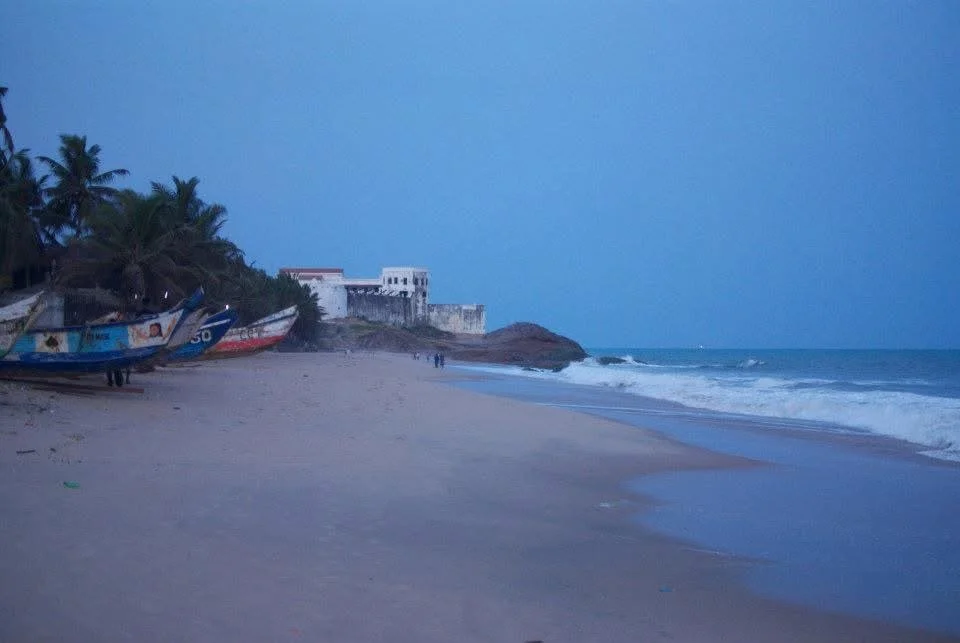
Cape Coast Castle (photo by Daniella, 2012)

View from Cape Coast Castle, looking out at the Atlantic ocean. (Photo by Daniella, 2012).
CREDITS
Created, written, produced, edited, and hosted by Daniella Barreto.
Music, mixing, and sound design by Alexandria Maillot.
Script editing by Kevin Ball and Lauren M.
Additional script feedback from Gordon Thane.
Fact checking by Anika Sharma.
Final mix and mastering by Nick Dooley at Good Egg Audio.
RESOURCES
** READ THIS FIRST IF YOU ARE NEW TO THINKING ABOUT RACISM & PUBLIC HEALTH: Systemic And Structural Racism: Definitions, Examples, Health Damages, And Approaches To Dismantling (2022)
White Health and International Law (2025), Matiangai Sirleaf published in Race, Racism & International Law, Devon Carbado, Kimberle Crenshaw, Justin Desautels-Stein, and Chantal Thomas eds., Stanford University Press.
Rethinking Race & Risk in Epidemiological Training (2023), Natasha Richmond
Measure Racism, Not Just Race: Recommendations for Scientific Practice (2026), F. Enders, P. Alberti, E. Golembiewski, M. Orellana, P. Braveman, V. Brown, N. Chambwe, C. Ford, J. Balls-Berry
The dark history of Canada's Food Guide: How experiments on Indigenous children shaped nutrition policy (2021) [CBC]
Public Health Liberation – An Emerging Transdiscipline to Elucidate and Transform the Public Health Economy (2022) C. Williams, J. Birungi, M. Brown, J. Deutsch, F. Williams, P.S. Perkins, P. Bishop, D. Walker.
Books
Medical Apartheid: The Dark History of Medical Experimentation on Black Americans from Colonial Times to the Present - Harriet A. Washington
Fatal Invention: How Science, Politics and Big Business Recreate Race in the Twenty-First Century - Dorothy E. Roberts
How Europe Underdeveloped Africa - Walter Rodney
Maladies of Empire: How Colonialism, Slavery, and War Transformed Medicine - Jim Downs
Episode 7: Legacies of Colonialism in Public Health

Cape Coast Beach, Ghana (photo by Daniella. 2012)
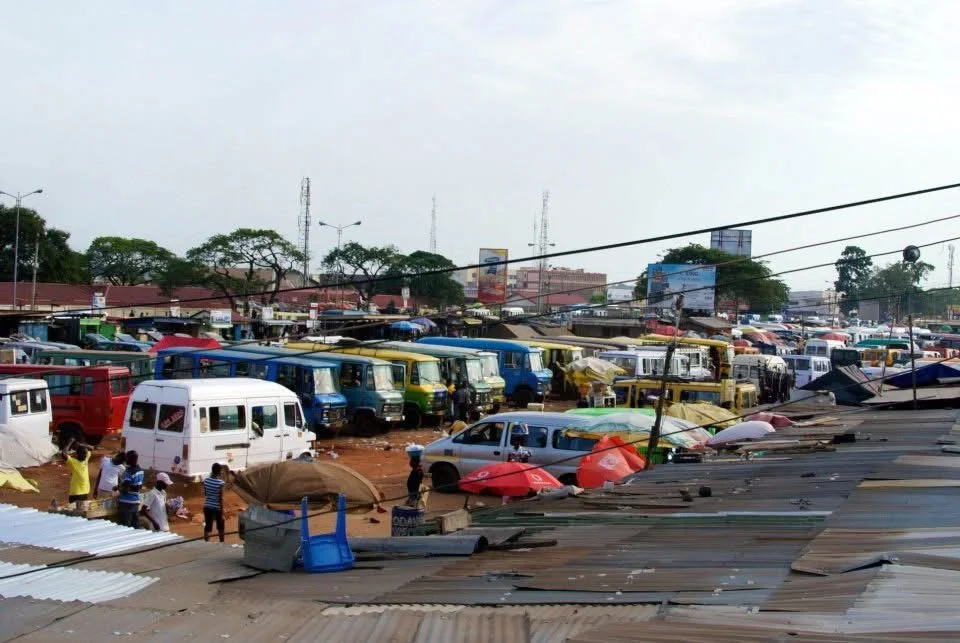
The bus depot with buses to Accra.
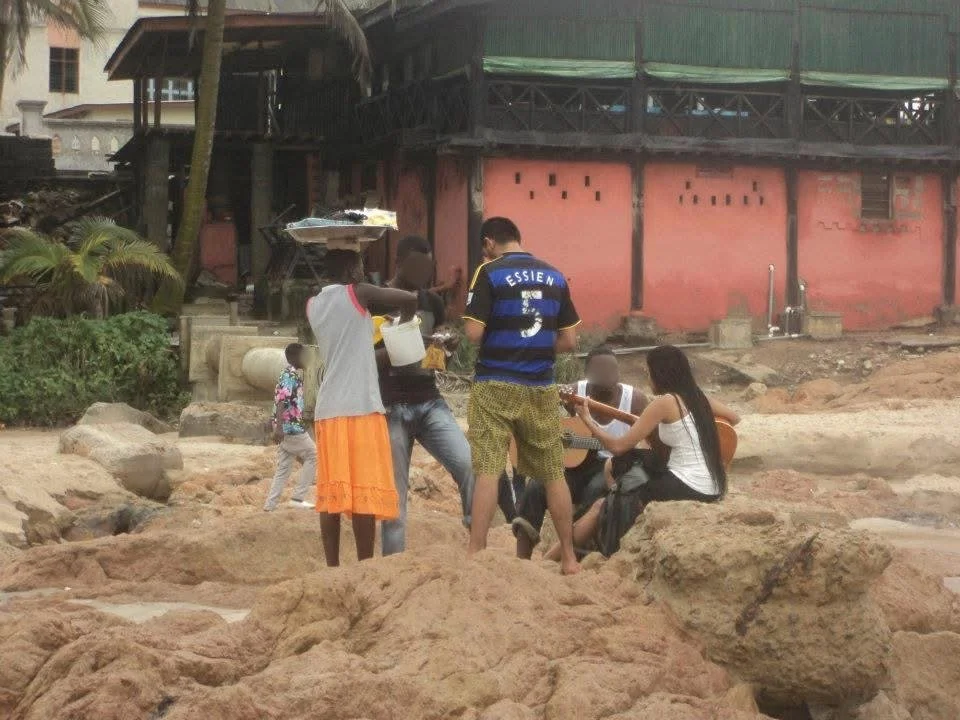
Our group at Cape Coast beach.
-
DANIELLA: Before we start I want to lead with a content note that in this episode contains mentions of residential schools and colonial violence.
This first photo is Mathew, age 25. He’s in front of tall green grass. He’s staring off into the distance. He’s wearing a v-neck white t-shirt and holding a small Black child on his chest who’s facing away from the camera.<swipe sound>
Here’s Wouter, 31, in bright green shorts and white tank top. He’s carrying a Black child under each arm like a basketball while he towers over a bunch of other children running around at waist height. He’s at what looks like a school?
<swipe sound>
And finally, Aniek (Ah-NEEK), 26, A blue eyed, blonde-haired woman peeks out of a close up shot of a tightly packed group of Black children around her all looking at the camera. It’s very game-of-thrones-controversial-scene season 3 episode 10 when Daenerys Targaryen freed the slaves of Essos and it was…really weird.
<swipe sound, swipe sound, swipe sound >
<Guitar feedback intro>
DANIELLA: Hello, I’m Daniella. This is Public Health is Dead - the show to help you survive the new age of pandemics. I have a Master of Science degree in Population and Public Health but you definitely don’t need one of those to tell that public health is currently a dumpster fire! Cartoon supervillains have taken a sledgehammer to centuries of public health progress. How they even got to be at the controls is at once sad and frustrating because public health was backsliding before they were in charge.
This episode is about how the past informs the present and the future.
You’ve probably heard some version of “disease is a tool of colonization” referring to how the spread of disease helped colonial efforts of expansion and domination around the world. Pathogens that didn’t exist in the Americas hitched a ride with European colonialists and, in addition to the violence they brought, left mass death in their wake. For example, the introduction of smallpox to Indigenous groups was deadly on top of genocidal policies.
Death and disease from the germs Europeans brought with them happened all over the world, killing large parts of populations and adding to the violence colonialists used to take power.
Today, tiny pathogens continue to have a massive influence on global power dynamics in different ways. Including when organizations and people go to poor countries to “help”. A cholera outbreak in 2010 was traced back to a UN peacekeepers camp in Haiti. That outbreak killed thousands of people. People wonder whether a similar thing could happen with COVID in Cuba as a new variant is spreading and people are descending on the country to deliver aid around the blockade. When hospitals have no power, if people get really sick and there aren’t a lot of resources… that’s a recipe for preventable deaths.
This episode is all about the throughlines of colonial history in public health, especially when it comes to Africa, and how this history influences what global public health focuses on in the present day.
What does the past mean for the global approach to COVID and for handling future pandemics?
We’ll look at some examples of how the interests of whiteness have often dictated public health priorities, how care and violence can be intertwined, and the ways systemic racism is embedded in pandemic response - including with the new pandemic treaty.
We’ll use the terms Global North and Global South in this episode because that’s what a lot of the references use but there is pushback about these terms because they can potentially flatten the issues low- and middle-income nations face.
CHAPTER 1: H-O-T
Mathew, Wouter, and Aniek, the people I mentioned at the start, are all owners of lucky featured Tinder profiles from the now defunct blog ‘Humanitarians of Tinder”— a website that collected images of (mostly) white people posting pictures of themselves with (mostly) Black kids to post on their dating profiles and pitch themselves for a date.
<ta-da sound>
It’s actually been the subject of a few academic journal articles: “Humanitarians of Tinder: Constructing Whiteness and Consuming the Other” in the journal Critical Ethnic Studies.And that says: “...the racialized Other is being used to advertise for and promote the photo subject's personality. This act of consumption has deep roots in racist and colonial history.”
Oh boy does it ever.
And: “Tinder and humanitarian hook-ups: the erotics of social media racism” in the Journal of Feminist Media Studies with a research question: “how does holding an African baby make someone ‘hot’?” Maybe we can ask Mathew.
Humanitarians of Tinder, or HoT, (see what they did there?) got featured in The Guardian, The Atlantic, and Business Insider. There was a mass appeal to how cringey it was for people to show off to potential dates that they’d gone on some trip to “help” poor kids in some far off land and how “good” they were.
Some of the people who did this are probably really embarrassed by it now and wouldn't do it again - hey, we live, we learn.
The voluntourism programs that prey on idealistic young people visiting Global South countries follow in the age-old traditions of colonialism and maybe that should have been in the fine print.
I should know. I did a version myself.
Ghana 2012. <Scary movie horror stab>
Ok It wasn’t THAT kind of trip.
But I told myself: I’m from Africa, I was born on the continent, grew up there, it was different. Right?
Well now I speak like… this [Canadian accent]. My parents had professional qualifications that appealed to the Canadian government. We were able to emigrate for different opportunities. Maybe it’s not so different.
This was an undergraduate exchange program between my university and a university in Ghana. Me and two other students along with a couple of Ghanaian students from the university were given a work placement. It was a branch of a reproductive and sexual health organization. Sometimes it felt fine and sometimes it felt a bit weird.
We were basically handed busywork counting and compiling data to report back to funders. We were interrupted by goats screaming under the office windowsills <bleat>. Have you ever tried to count around screaming goats? It’s very hard.
We bought cheap bicycles off some guy on campus, called ourselves Ghana With the Wind (sorry) We cycled 15 minutes to work and back every morning for a few months.
On the weekends we’d hang out with other students at the university. Or get in a tro-tro to the bus depot and go to the capital city of Accra. Or walk along the beach in the unsettling shadow of Cape Coast castle. This castle is a place where enslaved people had been confined before they were stolen away in slave ships through the Door of No Return.
Besides running sexual health workshops, like I had in Vancouver, we were also occasionally piled into a van to help the nurses. There were long community lines of people who wanted rapid HIV tests, the preliminary finger-prick kind. And we were extra pairs of hands. The centre showed us how and what to do. It’s really not hard. They actually look similar to COVID rapid tests now that I think about it. But this was really troubling to us at the time. We had a meeting with our supervisor and voiced our concerns about whether we should be helping with these tests, given the voluntourism discourse at the time. We’d done a lot of handwringing with our university advisor about it before we left. But we were told it was part of the job – even though we never had a job description. It was basically whatever the centre supervisor, a funny man named Michael, told us to do.
<music>Would we have been allowed to do this in Canada? Maybe. Maybe not. I didn't – and I don’t recall any of us – getting a positive rapid test so thankfully we never had to send someone reeling to the nurse to make an appointment for a follow-up. But what if we had? Does that even matter?
But then you get people like Renee Bach.
Some call her an overly idealistic do-gooder who went too far and couldn’t climb out of a lie.
Some call her a monster. <discordant dark music>
There’s a podcast, tons of articles, and even a 3-part HBO docuseries about her. She was a 19-year-old white girl who left her hometown in Virginia, where she had been part of a Christian homeschool program.
In 2009, with no medical training whatsoever, she set up a malnutrition centre in a small town called Jinja in Uganda.
Renee Bach maintains she never represented herself as a medical professional. But the people who sued her in Uganda perceive this differently. Many people who worked for her organization have said she performed medical procedures that she was not even close to qualified to do. She herself said she ran blood transfusion tubing and inserted IV lines into children. She’s accused of going to the local hospital to convince parents to send their sick children to her clinic.
More than 100 Ugandan children died by the centre’s count.
I was shocked when I heard about it. It is heartbreaking thinking about those kids and their families. How awful it must have been to believe someone would help you when access to care is not easy in the first place. And then have your child die.
At the same time, it wasn't an anomaly. White people going to Africa to “help” because they think they know better is not new at all.
Over centuries of colonization, African people (and Indigenous Peoples around the world) have suffered extreme violence, family and community disruption, and ongoing resource extraction because white people showed up and unleashed untold horrors.
And the flip side of that coin: people came to educate the unenlightened people in “deepest, darkest” because God told them to.
The Doctrine of Discovery of 1493, assigned the absolute right to acquire territory of all lands not inhabited by Christians and subjugate the people.
The Vatican only rejected it 500 years later in 2023. Canada hasn’t because it’s a foundational concept to this country’s 150 year existence. Canada’s actually pretty new.
What many of us generally know about colonization - me included - is a fraction of a fraction of the violence and harm actually inflicted.
Some people say, “Well, colonization brought positive things too”. And to that I recommend Walter Rodney’s book “How Europe Underdeveloped Africa”. In short: any potential or perceived benefits came with exponential harm and thievery and was more for the gain of colonialists if people were healthy enough to work and contribute to extracting those resources. Or, as the famous proverb popularized by Nigerian novelist and poet, Chinua Achebe, goes, “Until the lions have their own historians, the history of the hunt will always glorify the hunter.”
<music>
Renee Bach’s exploits were uniquely bold for the 2000s. Regardless of her intentions, her actions show that there are broader systemic issues around access to medical care. What does it say about the quality of care and challenges in the Ugandan healthcare system for her to have been able to do that for so long without being questioned?
People in poorer countries generally have less access to good health.
People in richer countries generally have more. Of course health disparities exist within richer countries, obviously, but in richer countries people often have better access to clean water, sanitation, vaccination, medication – overall public health has been better.
<abrupt music stop>
Which is why it’s been alarming and disheartening to see the antivax movement gather steam again over the last few years in North America. Vaccination rates are slipping around the world. Diseases that were previously held at bay due to good vaccination coverage are roaring back now that too many people are unprotected. Canada lost its measles elimination status in 2025.
DANIELLA’S MOM: So at the time in the mid to late eighties, early nineties in Zimbabwe…
DANIELLA: That’s my mom. She was a doctor in Zimbabwe, where I grew up, and also has a PhD in immunology. So that’s Dr. Dr. Mom to me. But don’t worry, I made her proud and became a podcaster.
DANIELLA’S MOM: I'm not a pediatrician, but I recall distinctly in the hospitals in rural clinics that I visited as part of rural attachment during training, there was a lot of measles.
Measles caused debilitating illness as well as death. As well as you know, this is significant, especially in a resource-poor setting, is disability–the disability that can come with measles.
My impression is that mothers knew this and understood this because they saw their neighbours’ kids getting sick. Maybe they had a child who was sick or had measles complications. So they were certainly invested in protecting their children. And for mothers in rural settings, that often meant that they would walk for miles to get to a clinic on a day when they knew that immunizations were happening. And there was just this sense of honestly, I would say from my recollection, both excitement and gratitude. People didn't have to pay for the vaccinations. They understood the importance of the vaccinations in terms of preventing infectious disease. They were also incredibly proud. At the time, Zimbabwe had a “Road to Health” card. And when every child was born, when they left the hospital, they were given a “Road to Health” card.
It's bright yellow and it included things like birth weight and obviously birth date. And it allowed for children to be monitored in terms of their growth. What was their growth in length? What was their growth in weight? It also was an immunization record and there was a schedule for immunization. And not only did parents feel very proud presenting the road to health card at every opportunity when they interacted with healthcare for their kids, I know myself when I had you three kids, how yeah, I took pride in that Road to Health card and in ensuring that the immunizations were all up to date.
DANIELLA: And my mom loves a good analogy so:
DANIELLA’S MOM: I was driving to work the other day and it's been very, very rainy, as you know, and I saw a mom walking along with a little, I don't know, child was maybe about four years old…
DANIELLA: The mother of the child had rain boots on
DB’S MOM: …and it made absolutely perfect sense. And then I looked over at her little boy and he had rain boots on. Obviously. From that I learned, okay, this mom cares about her son, cares that he has the right footwear for the appropriate season. That's what the Road to Health card and having immunizations meant for moms in Zimbabwe. From my recollection, it really was a manifestation of taking care of the next generation, protecting them.
DANIELLA: So for her when it comes to seeing people reject vaccination…
DANIELLA’S MOM: Yeah, I... I find it confusing and baffling. Part of my confusion is my grounding in immunology. So learning, you know, what's the immune response when diseases develop with the goal of: well, how can we prevent this? How can we make people's quality of life better? How can we prevent suffering?
The other experience I recall from my training in Zimbabwe was how much cancer of the cervix was a significant problem.
DANIELLA: She remembers the women who experienced cervical cancer, people who are being treated, and how many have died.
DANIELLA’S MOM: What would they give to know that they could have access to a vaccine to prevent all that suffering? It's the same with measles.
DANIELLA: Mhm
DANIELLA’S MOM:The strides in our understanding should make life better for all of us. I mean, I think that’s –for me– that's a large part of science, especially science around human biology. The whole purpose of it should be to improve life on earth. For all of us, not some of us, for all of us. So I can only say I'm, I'm baffled.
DANIELLA: It’s taken a lot for African doctors and African-led public health efforts to support communities in all of the distrust that exists in the afterlife of colonialism. The medical “care” that came with colonialism is so entangled with violence and dispossession. So when someone like Renee Bach thought she was just able to show up and play doctor in Uganda, that understandably rubbed a lot of people the wrong way.
Matiangai Sirleaf is a legal scholar and professor in the school of epidemiology at the University of Maryland. She says there’s a long legacy of inequity in global health that means even if you have no experience, your accent or the colour of your skin often gives you authority over people. You’ll get to meet her shortly.
DANIELLA: First, let’s look at an example of this inequity in global health.
For one, you may have heard of the proposed Hepatitis B vaccination experiment in Guinea-Bissau funded by the United States. The idea would have been to only vaccinate half of the babies in the experiment at birth and see what happened. This, despite the high prevalence of Hepatitis B among people giving birth in that country. And how often transmission from birthing parent to child happens.
It says a lot about whose lives are valued, especially when a vaccine against hepatitis already exists and has been used for decades to effectively protect against getting the virus. To deliberately withhold it would be a colossal ethics breach. And, like many people have said, kind of reminds us of the Tuskegee syphilis experiments.
I’m sure you’re familiar already, but if you don’t know what this is, the Tuskegee study was a study of Black men in the United States. There were 399 who had syphilis. 201 who did not.
The ones who did were not given the existing, effective treatment for syphilis just so that white researchers could see what happened to them.
The study began in 1932. <time passing ticking sound>
It continued for decades after medical experimentation in Nazi concentration camps had been revealed.
It continued after the principle of informed consent had been established through the Nuremberg Code in 1947.
It continued after the civil rights movement began in the 50’s.
To me at least, that betrays what the researchers thought about Black people as research subjects. Which also tracks with a lot of colonial public health and medical history as we will soon see.
The experiment ended in 1972—within living memory for many people. More than 100 men died. The study was only forced to end because of dissenters within the public health service, the subsequent press expose, and public outcry. The President of the United States finally gave an apology in 1997.
Harriet Washington, author of the book Medical Apartheid, details the brutal history of medical experimentation on Black people in the United States from colonial times to the present. And it’s a long book because Tuskeegee isn’t even the half of it. She says the syphilis study shows repeated patterns of selecting Black people for the riskiest studies, the myth that disease somehow works differently in Black people vs white people and using black bodies to generate profit and new clinical discoveries. Except even the Tuskegee physicians admitted – before the study ended –that it gave them no new clinical knowledge that would help future patients.
Thankfully, as of this recording, it seems that the proposed hepatitis B vaccination study in Guinea-Bissau has been cancelled. It’s been “blasted” by the World Health Organization.
But it still desperately prompts the question: why was it fathomable in the first place – in this year of 2026 – that the US health department could fund a blatantly problematic experiment in a small African country many people had never heard of?
Professor Matiangai Sirleaf has a pretty good idea of why. In 2025 she wrote a research paper called “White Health and International Law”. We’re going to lean on it a lot for the next section. In it she talks about the impact of Renee Bach as inseparable from the history of colonialism in global health.
She writes, “the audaciousness and exceptional nature of [Bach’s] actions, which resulted in the deaths of already vulnerable children, is intrinsically linked to long histories of drop-in missionary trips and White saviorism in colonial medicine.”
DANIELLA: I got to talk to her for this episode and she says:
SIRLEAF: Let’s jump right in. I love this.
SIRLEAF: ...that history from colonial and tropical medicine informed the development of the global health regime
<low drums>
DANIELLA: The thought process, which may not even be conscious, is: “Whatever one’s qualifications, they must be more than those of the Indigenous population.”
The same has happened in Canada, and all over the world.
White supremacy is a hell of a drug.
CHAPTER 2: White Health and Medical Colonialism
DANIELLA: What is global health? It’s a field entwined with medicine and public health. It has kind of fuzzy definitions. An NGO representing several universities worldwide says the goal of global health is to prioritize health equity for all people around the world.
Unclear.
The Canadian Institutes for Health Research says, a bit more bluntly: global health “focuses in particular on the health of people living in low- and middle-income countries…” Okay.
Professor Sirleaf says, even more plainly:
SIRLEAF: if we think about the very founding of global health as a field that was based on tropical and colonial medicine, which was based on seeing people in the periphery as racialized and disease threats and formulating regulations to try to manage those threats then we can understand what is happening today as a long arc in global health in which the field has engaged in sort of really a predatory way with the rest of the world.
DANIELLA: Many low and middle income countries are made up of Black and Brown people–the majority of the world– sometimes called People of the Global Majority. Race is pretty much inseparable from global health.
But first we need to get one thing straight.
It's important to recognize that race itself is a made up thing. It has no basis in biology. The system of racism causes real embodied damage to people’s biological systems and to our communities. But race as a concept? It’s made up.
This scientific racism of the 1800s categorized people into a hierarchy with white people at the top. And it was invented to justify imperialism, colonization, eugenics, and social policies that excluded groups of people.
The logic of white supremacy is: if everyone else is genetically inferior to white people, it makes the privileging of white people acceptable – including any violence that has to happen to secure domination over anyone considered “other”. White supremacy is baked into the foundations of many institutions we know even if they have nice-sounding diversity statements now.
If you kind of pick at the supposedly rigid categories of race - they fall apart pretty quickly. Because they’re not rigid at all. Race is malleable and used for political purposes. It’s not a proxy for genetics, like many researchers assume.
Multiracial people exist (hi, nice to meet you I’m also South Asian). Some groups of people were once not considered white but are now. It’s not as cut and dry as we’re led to believe. If you want a good read about the invention of race and how it impacts research, I highly recommend the book Fatal Invention by Dorothy E. Roberts. Not enough health researchers are equipped with a good understanding of what race is, when it is relevant, and when it’s not.
At the University of Toronto, Natasha Richmond, who is now studying medicine after a degree in epidemiology (yes, we love to see a public health degree before a medical degree!) She wrote: “race is used as an instrument of domination used to give and withhold power”. She notes that “epidemiology is a political arena and must be taught as such.”
Most people are not taught much about this in any level of schooling –unless they seek it out–but the short of it is that whiteness is distinct from the racial category of white. Whiteness and white supremacy are the system of power we’re talking about when we talk about “white health” in the context of this paper “White Health and International Law”. (please don’t fill up my inbox with white tears, I get enough nonsense emails already)
So, as Professor Sirleaf said, the field of global public health was born out of colonialism and that’s important because prioritizing the health of white people became central to the global public health regime to protect colonization efforts.
SIRLEAF: What we're seeing today is the perennial question that global health has always faced, um, which is: Can it escape its colonial origins and move away from valuing and centering the health of people within the Global North and treating everyone else on the periphery as sort of instrumental or irrelevant to what is happening within the center.
DANIELLA: The health of Black and Brown people outside the “center” is either seen as worth protecting so they don’t pass diseases that interfere with the production of capital. Or their health is seen as irrelevant if it doesn’t interfere with the production of capital.
Some diseases have gotten more attention than others because of their potential to affect predominantly white nations making money.
SIRLEAF: We're talking about the social construction of disease with racial meaning and imbuing it with sort of an attachment or affinity to particular groups that's not based on sort of biological anything really with respect to disease, but it's about the way in which we in society and actors in society tend to use racism and through racist actions, associate certain populations with diseases and then that translates into sort of political, economic, legal and social privileging of the diseases.
DANIELLA: It’s often infectious diseases like HIV, ebola, mpox, that get a lot of attention in global public health
SIRLEAF: So ailments that are thought to touch and concern particular racial groups are either heightened in importance particularly when they are seen as touching and concerning the interest of, of white peoples and the needs of capital
DANIELLA: It showed up in Canada’s colonizing efforts. “Indian Hospitals”, as they were called, weren’t opened because the Canadian government was genuinely concerned for the welfare of Indigenous Peoples but because of anxieties about the public’s health. They wanted to eliminate an infectious disease threat to the white population, not make sure there was care and treatment for Indigenous People.
Professor Sirleaf says racism and classism play a fundamental role in the development of global health which has meant that white health remains a priority internationally with how public health addresses infectious diseases.
Borders are sites that enforce inclusion and exclusion and they’re often associated with race. Of course, it’s a well-recognized issue that health disparities between poorer and richer countries have existed for a long time.
To try to address this, In 1978, one hundred and thirty four countries sent representatives to the International Conference on a conference on Primary Health Care in Kazakhstan. All one hundred and thirty four countries signed in support of the Declaration of Alma-Ata.
The aim? Health for All by the year 2000.
But whenever an even moderately progressive target or goal is set, it seems the same old arguments are trotted out: <echo montage> How is this possibly doable? This is way too hard. Can’t do it. Nope. Not economically feasible. Too expensive.
It happens with climate change, it happens with COVID.
Economist arguments popped up against the declaration: it was not cost effective, too broad, too idealistic, and had an unreasonable timeline. It was also criticized for being too top-down and not responsive to local realities.
After Alma Ata, international organizations made new attempts. Like the Sustainable Development Goals – a set of targets to decrease health disparities which the world has aimed to achieve by 2030.
We’re just a few years away. And we’re nowhere near on track. 3 of the goals are going backwards! In 2023, The UN Secretary General, Antonio Guterrez said that unless we act now the Sustainable Development Goals might “become an epitaph for a world that might have been.”
Let’s hope we can change course. We haven’t finished inscribing that epitaph. But we’ve been painstakingly carving it out. And if we finish it, we shouldn’t be shocked by the world that will be. It’s been a long time in the making.
Dark legacies of western doctors, experimentation, and coerced vaccination of colonized peoples haunt public health efforts today.
It’s interesting there has been so much focus on the hepatitis B vaccine because, despite how much it has helped humanity and prevented a lot of suffering in the world, it has a somewhat questionable history itself in the realm of global public health.
Enter Baruch “Barry” Blumberg. He was one of the co-developers of the vaccine in the 1960’s. This vaccine has been called one of the first anti-cancer vaccines because cancers of the liver often develop from Hepatitis B infections, which the vaccine is really good at preventing. He won a Nobel Peace Prize for his cross-disciplinary work in research and development of such an impactful contribution to human health. He also shared it freely and which, in my opinion, should happen a lot more than it does.
But the vaccine’s story is not quite so simple.
<seagull sounds, ocean layers, “tropical” drums>
Because of his fascination with “the tropics” Barry travelled a lot. “The tropics” are countries closer to the equator with a year-round warm climate. This geography was construed as being “unhealthy”. Tropical medicine emerged from this colonial construction to manage so-called tropical diseases. One of the most recognized schools of public health in the world today is still called the London School of Hygiene and Tropical Medicine. It's also, incidentally, where my mother went.
Professor Sirleaf points out that “tropical diseases” are actually a misnomer because many used to be endemic to the Global North - things like malaria, cholera, dengue, and leprosy all disappeared here by addressing the social determinants of health. It’s not that tropical climates are inherently unhealthy. But back to Barry.
There’s actually a photo of him in Suriname with a Black child under each arm that doesn’t look much different from those pictures on Humanitarians of Tinder at the start of this episode. I wonder if he snail-mailed it to his sweetheart.
After medical school, Barry and his colleagues were interested in genetics and why people exposed to the same environment got sick with different things– an age-old question.
He continued to travel the world gathering blood from “native” populations when he came across an antigen that would change his life trajectory and increase the average human life span.
They originally called it the Australia Antigen, because he discovered it “in the blood of an Australian aborigine”. He found that the blood serum had an antigen that reacted to a blood sample he had collected from someone in New York who had hemophilia. People who have received a lot of blood infusions, like people with hemophilia, would have had a lot of antibodies in their blood from other people. It reacted with the antigen contained in the new blood sample. Barry and his team eventually deduced after many years of research that it was the hepatitis B virus. The vaccine was developed soon afterwards.
In 2010, before he died, Science magazine published an article on researchers who had gathered large quantities of biological samples and asked the question of what to do with the samples after they died.
Barry had one of the largest collections: almost 4 walk-in freezers full of blood samples from around the world. By his own count he guessed he'd gathered close to half a million blood samples during his career.
If you’re thinking this sounds a little uh, vampire-coded, me too, but more seriously it raises a lot of questions about biological data ownership and sovereignty, especially when it comes to Indigenous Peoples. And in the 1950s I doubt it was even considered despite Indigenous groups around the world being aggressively targeted for genetic research from western scientists.
Today there are clear principles like OCAP® –which stands for ownership, control, access, and possession– developed by First Nations themselves. These guidelines and principles have been developed because of the serious harm research has caused in the past. Even if the research has resulted in positive outcomes for humanity, or even if some of it may have been well-intentioned, that doesn’t mean it was ethical. Or respectful. Or safe.
This is a bloody tinge to the history of the field of epidemiology and public health, which partly developed from the data possibilities that occurred imperial power over captured populations.
If you’ve heard of Florence Nightingale, you probably think of her as the lady with the lamp, a nurse, an image of a white apron and one of those frilly cap things. She is often remembered for her work in nursing. But according to Jim Downs, who’s a historian and author of Maladies of Empire, she was an early epidemiologist and data visualizer. She spent a relatively short time as a nurse compared to the many years she spent gathering, analyzing and publishing reports on disease transmission. Like an epidemiologist would. But she was never part of the boys’ club of the Epidemiological Society of London [fake British accent].
When she was based in India she had a wealth of data available to her through the bureaucracy of the British army. She created policy based on evidence she gathered—including advocating for increased ventilation to decrease disease transmission. (hm, novel! /s)
She also held common views about race at the time but the author pulls punches about her racism because she seemed to be less interested in pathologizing groups of people and more focused on how unsanitary environments were the cause of diseases.
Other writers have plainly called her “the racist lady with the lamp” because of what’s revealed in her own writings. Nightingale wrote, in 1863, that the deaths of Indigenous children in residential schools in Canada was an acceptable cost of colonial progress.
Many children never went back to their families after being taken to these residential schools. Tuberculosis (or TB) was rampant, as was malnutrition. And these are very connected. And instead of making changes to stop children from starving, these institutions became sites for nutrition experiments, led by someone named Lionel Pett. He went on to create what we now know as Canada’s Food Guide, the official government guidance on healthy eating.
All of these populations: Residential school children, Indigenous Peoples on reserve, enslaved people stolen through the door of no return to be captives on the plantation, soldiers in the battlefield… all were people whose agency was severely limited.
They could also be researched in these heavily surveilled, closed systems. Captured populations can be tracked and compared over time much more easily than unrestricted people can.
This still happens in some respects. Prison research is a clear example of a captured population. Areas of concentrated poverty are similar. Vancouver’s downtown eastside, in British Columbia is a neighbourhood experiencing a drug poisoning crisis and extreme urban poverty. Drug policy advocate, Karen Ward, pointed out to me that it also essentially functions to public health researchers as a captured population. My master’s research on HIV outcomes was connected to the Downtown Eastside. If you’re doing any public health research in Vancouver it’s almost impossible to avoid.
Captured populations were a direct outcome of policy choices and decisions made by people who hold power. And it happened all over the world.
In South Africa, Black populations were restricted to Black-only areas and a pass system was implemented. Black people could only move around in designated white areas if they had permission and a pass. In their land – the land of their ancestors. The same geographical restriction to reserves and a pass system was implemented in Canada against Indigenous Peoples. The Nazis used IBM systems to better track and surveil Jewish populations during the Holocaust. And currently Palestinians are restricted, tracked, surveilled, and killed by Israel with high powered tech and AI capabilities.
<music>
There’s an interesting tension I see in epidemiology between the necessity of data tracking and surveillance to understand patterns and disease distribution and how easily surveillance and data collection can become harmful.
Epidemiology’s origin stories are important because there are people behind the data. The field is and its tools are not neutral even though it is presented to be today. On top of this, researchers are quickly adopting AI systems without examining fundamental data ethics questions, which have existed since the field began.
And AI typically replicates the past. If we don’t address these questions, we’ll likely continue to make the same mistakes.
AI and specifically Large Language Models, LLMs, work by reviewing a bunch of past data to look at patterns and then they create an output based on what’s most likely given the past. That’s what gets pumped out.
A few researchers in 2023 actually tried to prompt AI to produce new global health images. Their goal was to flip the well-recognized stereotypes of Black suffering and white saviourism. But the results were… astoundingly racist. They concluded in the Lancet, “we were unable to achieve our initial goal of inverting stereotypical global health images”.
AI is a “backwardsness machine”, not a “forwardsness machine” as AI researcher and physicist Dan McQuillan has said. And we already have plenty of examples of AI perpetuating discrimination in its outputs and having terrible impacts on people’s health outcomes.
CHAPTER 3: COVID & Racism
DANIELLA: So how does all of this about racism and discrimination in the past connect to public health in the present and to COVID-19?
Well, there are racialized hierarchies of care and concern that dictate how public health operates in the world.
Professor Sirleaf argues that tropical medicine emerged to make the region more hospitable to Europeans and their colonies and was an important part of colonial subjugation and expansion.
DANIELLA: An example: If you’ve ever wondered why the US CDC has its headquarters in the South– in Atlanta– it’s because the military bases there were being ravaged with malaria, a disease so often associated with “the tropics”. There was no point in spending time and money on public health interventions to prevent malaria overseas if the soldiers were getting malaria at home first. So, the CDC was born out of military necessity.
We saw responses concerned with the interests of white health in similar ways through the early stages of the COVID pandemic. Germs know no colour line.
When COVID emerged, nasty xenophobia and racism surfaced. And it’s never far from the surface if it’s not already in your face. Travel restrictions and control of movement have been tools used in history to limit disease spread and they’ve also often reinforced racism.
DANIELLA: Of course a major discriminatory way people responded to the COVID pandemic was overt anti-Asian racism, which caused a lot of harm to Asian communities and sparked Stop Asian-Hate campaigns.
SIRLEAF: the Trump administration was quite clear in the stigmatic language used right, the overt signaling to sort of “kung flu”. Um, as a way of racializing COVID-19 with people who are of Asian descent or present as Asian. But this is not something that was unique to the Trump administration.
DANIELLA: Like I often say, it isn’t only the Trump administration that has been doing questionable things in public health. Many of the things that happened before actually set the stage for public health disaster…
SIRLEAF: There was covert signaling to racialization underneath the Biden administration. The Biden administration had a testing requirement for COVID-19 that was at one point solely limited to travelers coming from China. As if the virus was engaged in sort of racialized border control efforts, checking documents and nationalities to determine who to infect next. And so there's a way in which racial and colonial logics have influenced COVID-19 law and policymaking and we see that over a couple of instances. A newspaper in France even published a headline, “yellow peril”, quote unquote, talking about the threat of COVID-19, which again is playing on racialized fears of diseases of Asian peoples
DANIELLA: We saw this play out in images and depictions of Black people and public health
MATIANGAI: this includes, um, following South Africa's genomic sequencing of the Omicron variant. Um, South Africa and Southern African countries were cut off, um, after tracing and alerting the world to this variant that was already circulating in Europe and already circulating in the US. One newspaper even published a little depiction of the racialization of diseases, which is something I wouldn't even have thought of when I was conceptualizing this and writing about it. But the image was one of brown viruses with sort of stereotypical, uh, phenotypical black features, um, that are traveling on a boat with a South African flag towards European shores. And, um, the viruses are clearly COVID-19. They have black hair, they have exaggeratedly big lips and all of these really problematic associations with Black people.
DANIELLA: It’s a trope. There’s a very specific way Black people get cast as “evil predatory disease spreaders coming from overseas” even if those words aren’t used exactly.
You can see it in the way Ebola and mpox has been talked about or the pictures used in the media. Things have changed a bit but HIV reporting in this regard over the last few decades has been stunningly racist.
MATIANGAI: You see this sort of resuscitation of images of Black African bodies as uncontainable as disease ridden, and, um, sparking racialized fears
DANIELLA: Unscientific knee jerk travel bans are another way racism rears its head in the way public health issues have to be addressed.
A travel ban from 1987 which prevented foreign nationals living with HIV from entering or immigrating to the United States was only removed during the Obama administration.
When the COVID Omicron variant was identified in South Africa, Canada’s immediate reaction was similar: to ban travellers from the region and then require negative molecular tests from a third country.
So, as journalist Stephen Thrasher pointed out, according to the Canadian government, South Africa could be scientifically good enough to alert the world of a new COVID variant but wasn’t considered scientifically good enough to conduct reliable tests.
When the government was pressed about having an Africa-only travel ban, Canada said “well uh… it’s not racist because uh… people can get sick on long flights from over there!”
Isn’t it exhausting?
The WHO actually advised against travel bans.
SIRLEAF: The politics of racial exclusion, racial subordination are replete in, uh, how society has dealt with diseases. Um, history is in our present time, right? It's not sort of some relic of the past. It's with us now. The past is very much present.
DANIELLA: Travel restrictions and lockdowns have sometimes been described as blunt tools of public health. The word quarantine? Quaranta giorni – forty days. It comes from the 14th century when ships had to stay docked and people isolated for forty days upon arrival. It’s one way to physically limit people from interacting and therefore limit disease transmission.
<sigh> And I want to address something here – something we hear often from people who don’t understand why some people wear masks in 2026. They say: “OMG you people want lockdowns forever???”
The answer is, no, we don’t want movement restrictions or lockdowns forever. It’s not the 1800s anymore. Those are not the only options. We have other ways to interrupt transmission besides isolation or lockdowns. There’s effective technology and tools that make quarantine or isolation not the only way to limit the ability for pathogens to pass between people. Vaccines are important but they were not and are not the complete answer to the ongoing problem of COVID.
In my opinion, respirators should have been framed as a tool for the freedom to do things and protection from harm. Not as restrictions to be imposed or bargained with.
The CDC did actually use masks as a bargaining chip – they said if you just get vaccinated you don’t have to do that anymore.
In fact, the general anti-mask sentiment – and the harassment it brought (and still brings, in my experience) – was strong. Some public health leaders insinuated it just wasn’t western culture to wear masks, implying it is “an Asian thing”. A survey-based study came out in the fall of 2020 showing that once they were aware the impacts of COVID disproportionately hit Black people, Indigenous people and communities of colour that white people in general – and particularly white men – were significantly less likely to mask.
So much for all that listening and learning about systemic racism I heard was going on in 2020? I dunno.
Public health should have been educating people about airborne disease transmission, explaining how effective respirators are, explaining how cleaning the air through ventilation and air filtration gets rid of infectious particles in the air. Not just for COVID but for many diseases spread through exhaled aerosol.
There’s still time to do this. There’s still time to change.
SIRLEAF: There has been a sense of, “Oh, COVID-19 is really just an issue for the people who are vulnerable.” That is based on ableist logic that I have refused to sort of be indoctrinated by um because it is based on discarding certain members of our population as disposable. And that is based on the eugenic logic of treating people as lesser-than because of their health status. COVID-19 dysregulates our immune system. So we are all being made more vulnerable by continued infections.
DANIELLA: While COVID now seems like it’s a free for all and reinfections for everyone are the norm, the impacts are disproportionate along lines of race and class because of the way society is structured. People who work service jobs and have to be face to face with people are frequently exposed. Like healthcare workers. Or restaurant workers. So are people who can’t afford to call in sick or don’t even have sick days.
Statistics Canada research between 2020 and 2024 repeatedly shows Black people continued to be disproportionately exposed, infected, and hospitalized by COVID. And were more likely to report multiple infections which we know more commonly leads to long lasting symptoms. And unfortunately that’s what you’d expect in a system that treats some people as disposable.
Outside Canada, in Africa, this one meta analysis was conducted but it is not representative at all because most of the countries were in North Africa, but 50% of almost 30,000 participants exhibited Long COVID symptoms. People outside the Global North who do get Long COVID might be less likely to have access to any kind of treatment because of longstanding health inequities.
CHAPTER 4: The Pandemic Treaty
SIRLEAF: the World Health Organization was founded on the belief that the extension to all peoples of the benefits of medical, psychological, and related knowledge is essential to our attainment of health.
DANIELLA: Sure, that sounds like a great idea!
SIRLEAF: But the World Health Organization mission and actions towards redistributive ends to give effect to this principle have been… negligible. right?
DANIELLA: Global North countries have a lot of sway in the institution. And you would think that before COVID arrived we’d have had some sort of global agreement in the event of a pandemic, right? There were some frameworks and guidelines but… not really. After COVID tore through the world and exposed massive inequities in vaccine access and more, pandemic treaty negotiations started in 2021. Hopes were high until it stalled in 2024… . We recorded this before the treaty was finalized.
SIRLEAF: One of the sticking points has been principles aimed at trying to ensure greater equity between richer countries and poorer states in terms of distributing higher obligations for funding and a number of things. And that has led to a big impasse in essentially all areas.
DANIELLA: Professor Sirleaf wrote in White Health and International Law, that the backdrop of the pandemic treaty’s negotiations is genocide: “The genocide in Palestine clarifies how zones of sacrifice persist – the bodies, lives, health, wellbeing of the vulnerable, of those on the periphery, those marginalized in society, who are treated as waste, as if they are disposable.” The same goes for people in Sudan, Congo, and other parts of the world whose lives are treated as worth less. That’s what this treaty was supposedly all about - ensuring more equitable distribution of health.
But there were a lot of problems. No clear breakdown of which countries were required to do what, no clear financial commitments.
DANIELLA: After a lot of back and forth the pandemic treaty essentially panned out to be more of the status quo. You can find detailed postmortems on the process but essentially: Nice words, a lot of “should”s and a lot of “endeavour to”s; rich countries aren’t obligated to do anything.
<slow drum>
Global health and the WHO’s past continues to inform the present.
I guess with friends like these, who needs enemies? And there are a lot of enemies. Some you’ve maybe never heard of like the Brownstone Institute. They’re a supporter of the flock of quacks in the RFK Jr. squad.
Members of this current public health demolition crew in the United States were also opposed to the pandemic treaty. And the United States has a huge influence on health around the world. While the regular process and barriers to the treaty were hard enough, these actors were actively goading Trump to leave the WHO, which he did, defeating the purpose of a global pandemic agreement since, you know, pathogens don’t care about borders.
The COVID-19 pandemic has been a catastrophic fumble on public health institutions’ part. The Lancet’s COVID-19 Commission called it a “massive global failure” from preparedness to prevention to international solidarity.
MATIANGAI: We have had several studies that show really negligible amounts of the gross national income of sixty six economies in the global north would be needed to meet the core obligations of the right to health. And in that vein we don't have any concrete and specific obligations for actors to provide dedicated financial resources to advance health justice, right? And so that doesn't evidence the commitment to the distinctively collective public interest that we have in health, all of us. And that doesn't further justice in any real way.
DANIELLA: Remember “health justice”. We’re going to come back to that because it might just be our ticket somewhere better.
CHAPTER 5: HEALTH JUSTICE AND COURAGE
DANIELLA: Speaking of better, it’s hard to talk about the field of global health without mentioning celebrated anthropologist and medical doctor, Paul Farmer, who passed away in 2022 after a lifetime of challenging power.
His take was different from much of the colonial global public health history we’ve heard about in this episode. It was his view that “some lives matter less is the root of all that is wrong with the world”. He and his colleagues at Partners in Health brought positive changes to the landscape of global health and showed that even in poor places, high-quality, dignified care can be delivered in partnership with communities.
They treated health as a human right. Many people in global health do believe this.
<music>
DANIELLA: There’s a sketch by a comedian, Vinny Thomas. This is a clip from one of his videos in 2021. He’s an alien giving Earth an interview about whether we can enter the Galactic Federation.
<alien swoop and warble>
VINNY: How fast are your teleporters? No. Teleporters uh uh, flying cars? No?... Okay. What about, does everyone have healthcare? Is there enough food to go around? It looks like some people are starving. You do have enough food then why isn't it… logistics? You want me to write… logistics. Okay. “Starving because of logistics <laugh>”… I mean, things could be worse, right? Imagine if you were still fighting over resources. Oh, you do? You have big wars. Oh, and you have a pandemic? Right now you have a pandemic?…Okay, well I think that should be enough. You've given us a lot to think about. Uh, we'll see you soon. Bye! Jason. Burn their application.
<alien warble ends>
DANIELLA: We could join the Galactic Federation if we wanted to. At Alma Ata, Health for all by 2000 was such a clear, simple, and surprisingly radical goal. We do have the resources.
The model of global public health that relies primarily on the charity of other states flawed approach to building health systems and health infrastructure”. Professor Sirleaf says it has simply not worked to address health needs.
After the United States left the WHO and ended various public health funding arrangements and programs with countries around the world, it left gaping funding gaps and threatened the lives of people who relied on this US funded programming.
Immediately afterwards, the clown car of health leadership in the United States offered billions in bilateral health deals to different African countries, many who had little negotiating power and weak infrastructure given everything we’ve discussed in this episode about the afterlife of colonialism. But African countries have been sticking up for themselves and their health data which has been quite encouraging to see.
Zimbabwe pulled out of a $300million agreement with the US because of the data sharing requirements – it was not clear if Zimbabweans would even benefit from all the health data extraction. (And the Zimbabwean government is definitely not known for making decisions that benefit its people!)
Kenya suspended an agreement with the US over health data concerns. Zambia pushed back against a health agreement that came with strings - it would have also had them agree to a separate mineral extraction agreement.
But this still leaves concerning gaps for how regular people will access healthcare that used to be addressed, if imperfectly.
Professor Sirleaf says the answer lies in health justice:
SIRLEAF: .. In providing redress and providing distributive justice within health towards bettering our lives and recognizing that, you know, health for all is attainable, right? That the current maldistribution of resources is not inevitable. That if we continue to dedicate resources to things like military industrial complexes, endless wars and the like, and not prioritize health and wellbeing that that misallocation of resources is going to continue our immiseration in our health and will not lead us to emancipatory futures.
DANIELLA: Emancipatory futures. If public health can break from its colonial past and integrate health justice into its work, we might get closer to something viable for more of us.
SIRLEAF: I think part of what has to happen is that like, sort of the rhetoric within the World health regime has to actually meet the policies. And that includes a redistributive agenda which has not been part of the global health regime
DANIELLA: Part of the point of this podcast is to broaden public health thinking towards health liberation. Public health liberation, liberation health, there are lots of slightly different ideas people have proposed but overall it’s that health can’t be understood in isolation.
It acknowledges weaknesses in the current public health paradigm. It suggests that what we often call health equity, isn’t enough. Health equity can be limited by its definition: "the fair and just opportunity to be as healthy as possible”. Where others argue we could eliminate health disparities altogether.
Public health liberation wants public health to be radically transformed because “the urgency of health inequity warrants it.”
Health justice means dismantling laws and policies that harm communities. We could have for example a pandemic treaty that embeds a duty to fund vaccine production and an obligation to share vaccine information freely, not blocked by patents. Or billionaires.
Public health can be better. We can still do something different.
We need the courage to do something different.
I say courage and not hope on purpose. I’m not going to try to force this episode to fold into something neatly hopeful. The choices of the powerful have ushered in a lot of pain, devastation and a polycrisis beyond what many of us could ever imagine.
But I don’t feel totally hopeless all the time. I actually found a gem I’m holding on to.
And I want to share it with you:
I was listening to a podcast recently on one of my little daily podcast walks. It was about the cult of AI and eugenics in Silicon Valley. (Light listening, I know)
The guest, Emile Torres, who has worked with Timnit Gebru, a Black AI researcher I admire, said that maybe hope and courage are bound up in some way but maybe you don’t need hope to have courage.
So even when you feel hopeless, it doesn’t mean you shouldn’t fight. There’s a distinction between the feeling of hope and the moral duty to make change in the world that is positive.
They said even if you accept the view that the future looks pretty bleak, that, if anything, is “all the more reason to fight …with as much energy as possible”.
And that really stuck with me because I don’t have a huge amount of hope for public health at this point either (Could you tell? With a show called Public Health is Dead? Me? Never!)
But what I do have, like you, if you’ve made it this far, is that burning feeling to keep going and do something besides rolling over and giving up in the face of it all.
We all deserve the best health we can have.
And the kids deserve a fighting chance.
Remember my mom’s story at the start of this episode? About seeing the other mom who had made sure her little boy had rain boots on in the rain?
DANIELLA’S MOM: I wish we would have the same desire as that mother had for each other, for everything from climate change, to taking care of our forests, infectious disease.
Like surely we're on this planet to leave it better for the next generation.
DANIELLA: I also heard UFOs are real so maybe we should start working on our planet’s actual application to the Galactic Federation, stat.
<outro music>
CREDITS
Public Health is Dead is created, written, produced, edited and hosted by me, Daniella Barreto.
Music, sound design, and mixing by Alexandria Maillot.
Fact checking by Anika Sharma.
Script editing by Kevin Ball, Lauren M.
Additional script feedback from Gordon Thane.
Final mix and mastering by Nick Dooley at Good Egg Audio.
Public Health is Dead is a listener-supported production. If you’d like to support the show please visit www.publichealthisdead.com.
And, listeners, this is the end of season 1 of Public Health is Dead ! Thank you so much for listening this season. I’ve met, collaborated with, gotten to interview so many incredible people. It’s been an exercise in growing and evolving and being vulnerable in public or whatever the LinkedIn girlies are saying. And I’d like to genuinely thank you. The response to this project has been unbelievable. And the show keeps growing!
I’m excited to officially let you know that we’re partnering with Good Egg Audio, a worker-owned co-op (hell yeah!) to produce more of the show you love. Their expertise in all things production is going to make it a heck of a lot easier for me and the small Public Health is Dead team to make this show more often and better!
We’ve partnered with AirFanta to provide a discount on air purifiers for listeners of Public Health is Dead.
AirFanta - 5% DISCOUNT CODE: PHID5
This is an affiliate code. If you use it, Public Health is Dead may receive a small commission at no additional cost to you.
Note: Cleaning indoor air with air purifiers powerful enough for the size of the room is an effective way to filter out airborne pathogens as well as smoke and allergens. Air filters are a tool that can help significantly lower infection risk from COVID, influenza, and other airborne diseases. Additional layers of infection mitigation to lower transmission risk at closer distances, like well-fitting respirators, are also recommended!
Air filters are often available to borrow from local clean air groups (e.g. in Vancouver, Clean Air 604) and respirators from local maskblocs (e.g. Masks4EastVan; others listed here).